
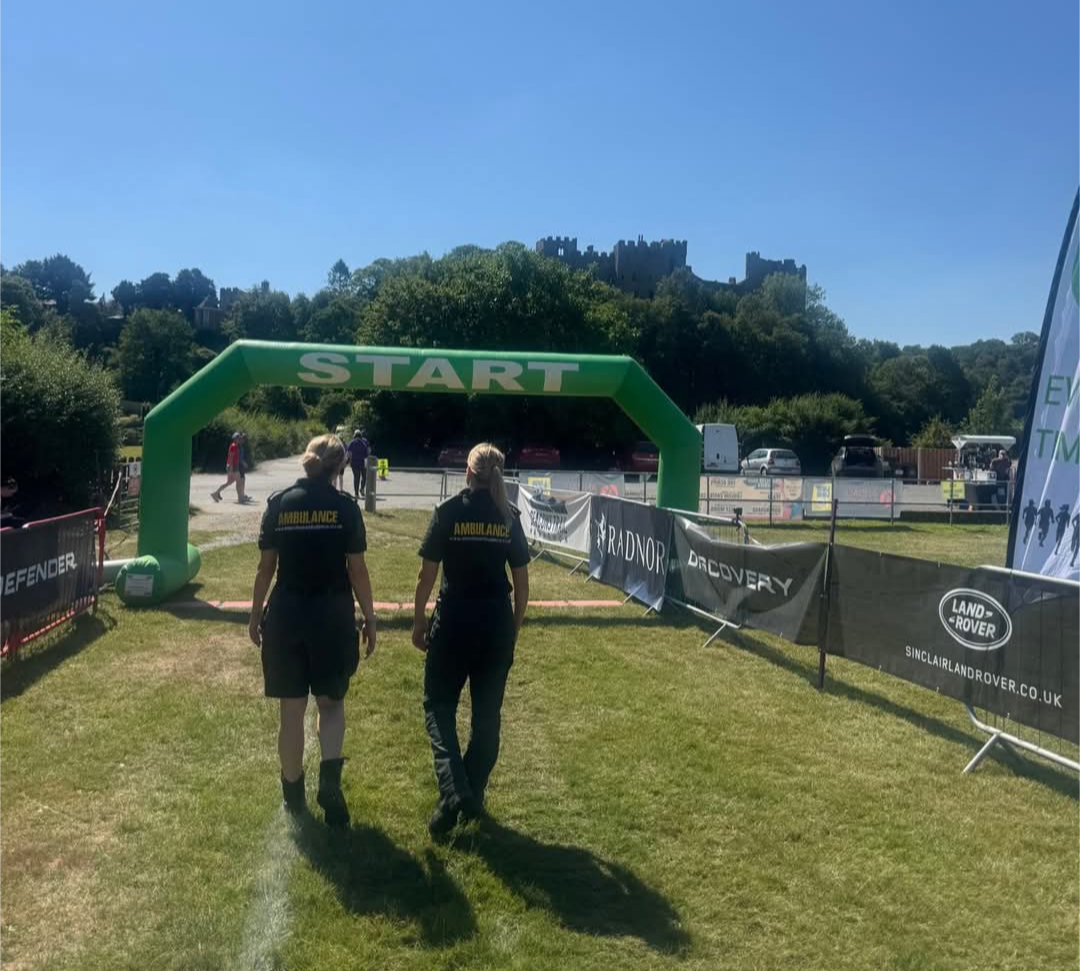
Medical Cover for Small Sporting Events: Parkruns, 5Ks, 10Ks and Trail Races
Small sporting events are often described as “low risk”.
In practice, they are one of the most commonly misunderstood categories when it comes to event medical planning.
Organisers frequently assume that because participation numbers are modest, or because the event is well‑established, minimal medical provision will be sufficient. UK guidance takes a more nuanced view.
This article explains what organisers of parkruns, 5Ks, 10Ks, trail races and similar community sporting events need to consider when planning medical cover – and why these events require a different approach from non‑sporting gatherings.
Medical cover for small sporting events – why risk matters
Sporting events involve deliberate physical exertion, which increases baseline medical risk even in fit, healthy participants.
The UK Athletics guidance makes clear that endurance running and competitive sport expose participants to additional foreseeable medical risk, regardless of the size of the field.
Unlike many community events, sporting events:
- Intentionally push participants beyond normal exertion
- Involve collapse risk at the finish
- Increase cardiac, heat‑related and metabolic stress
- Often take place on public highways, trails or remote terrain
This is why medical planning for sport is never based on attendance numbers alone.
Parkruns and informal community runs
Parkruns are often cited as examples of events operating with minimal formal medical cover.
It is important to understand that parkruns:
- Are not licensed competitive events
- Operate under a specific national framework
- Rely on volunteer management models
- Have clearly defined escalation arrangements
This structure does not automatically translate to independently organised 5Ks or charity runs, particularly where the organiser is inviting members of the public to take part in an endurance activity.
Assuming that a parkrun model can be copied wholesale is a common planning error.
5Ks, 10Ks and licensed road races
Once an event becomes a licensed road race, expectations change.
The UKA Good Practice Guide to Road Race Medical Services makes several key points that are highly relevant to smaller races, including:
- Past performance is not a reliable indicator of future risk
- Sole reliance on 999 does not meet an organiser’s duty of care
- Medical provision must reflect distance, terrain and participant profile
Even at races with fewer than 500 competitors, organisers are expected to plan for:
- Prompt basic life support response
- Defibrillation capability
- Effective casualty reporting and access
- On‑site medical oversight
These principles are consistently applied by Safety Advisory Groups when reviewing race plans.
Trail races and off‑road events
Trail and off‑road races introduce additional variables that significantly affect medical need.
These often include:
- Difficult or delayed vehicle access
- Increased risk of falls and musculoskeletal injury
- Environmental exposure
- Slower evacuation times
Even relatively small trail races may therefore require higher‑level medical capability than a larger urban road race, purely because of access and response time considerations.
First aid vs medical cover at sporting events
A recurring question is whether First Aid at Work trained volunteers are sufficient for small sporting events.
As discussed in our separate article on is First Aid at Work enough for events, workplace first aid is not designed for managing collapse, exertional illness or post‑exercise complications at public sporting events.
Sporting events typically require:
- Clinically governed medical provision
- Staff trained in managing collapse and exertional illness
- Clear escalation pathways
- Resilience if a patient requires ambulance conveyance
This does not mean every event requires paramedics or ambulances, but it does mean the decision must be risk‑led and defensible.
The role of casualty history – and its limits
Casualty data from previous years can be helpful, but only when interpreted correctly.
UK guidance cautions that:
- Low historic casualty numbers do not eliminate risk
- Changes in participant profile, weather or route alter risk
- Growth in novice runners increases presentation rates
Medical planning should always assume maximum credible attendance and demand, not average past experience.
What Safety Advisory Groups typically expect to see
For small sporting events, SAGs will usually look for:
- A documented medical needs assessment
- Clear justification for the level of cover provided
- Appropriate qualifications and supervision
- Defibrillator access and response times
- Evidence that NHS impact has been considered
Where these elements are present, provision is rarely challenged – even when it is proportionate rather than extensive.
A practical summary for organisers
Small sporting events are not “low risk” by default – they are specific‑risk.
Most do not require excessive medical provision, but they do require:
- Thoughtful planning
- Event‑specific assessment
- Appropriate clinical oversight
If you are unsure where your event sits, that uncertainty is usually a sign that the medical risk needs to be formally assessed rather than assumed.
Further guidance for organisers
If you are planning a sporting event and want a clearer understanding of what proportionate medical cover looks like in practice, our free organiser guide explains how current UK guidance is applied across different event types.